
We say “How are you?” so often, it’s become more of a habit than a real question. Most of the time, we don’t even wait for an answer. But what if there were better, more thoughtful ways to check in with someone? Whether you’re talking to a friend, coworker, or someone you just met, switching it up can make the conversation feel warmer and more real. Small changes in words can lead to deeper connections. In this list, you’ll find 40 fresh and friendly ways to ask how someone’s doing—without sounding like a robot or reading from a script.
What Does “How Are You” Mean?
“How are you?” sounds simple, but it isn’t. Sometimes it’s real, sometimes it’s just a habit. You hear it at the coffee shop or walking past someone at work—it’s polite, not deep. But other times, it matters. A friend asks after a hard day. A coworker checks in during a quiet moment. Then it’s not small talk—it’s care. The meaning shifts with the tone, the place, and the person. At work, it might be formality. At home, it might be genuine. So, what does it mean? It depends. But one thing’s true: it’s how people reach out, even if just for a moment.
When to Use “How Are You”
You can use “How are you?” almost anywhere—as long as it fits the moment. It works when starting a chat, sending a message, or easing into a call. It’s good for casual meetings, emails, and check-ins with people who matter. It shows respect or simple kindness. But don’t use it when things are tense, rushed, or out of place—it can feel forced. And when you do say it, make sure it sounds real. Look them in the eye, keep your tone warm, and mean it. That’s what makes the question stick.
40 Better Ways to Say “How Are You” in Everyday Conversations
1. What’s going on?
Meaning: Asking what’s happening in their life right now.
Explanation: More casual and open-ended than “How are you.”
Example: “Hey Alex, what’s going on?”
Best Use: With friends or coworkers you speak to regularly.
Worst Use: In a job interview.
Tone: Casual, friendly.
2. How have you been?
Meaning: Checking in on someone’s well-being over time.
Explanation: Implies a gap since last contact.
Example: “It’s been a while! How have you been?”
Best Use: Reconnecting after some time apart.
Worst Use: Daily check-ins.
Tone: Warm, thoughtful.
3. What’s new with you?
Meaning: Asking for updates in their life.
Explanation: Encourages sharing of recent events.
Example: “Hey, what’s new with you?”
Best Use: Catching up with someone after a break.
Worst Use: When you know the person’s going through a hard time.
Tone: Curious, friendly.
4. How’s everything?
Meaning: Broad check-in on life.
Explanation: Invites a summary of work, life, etc.
Example: “How’s everything at your end?”
Best Use: Casual catch-ups.
Worst Use: Very formal situations.
Tone: Relaxed, friendly.
5. How’s life treating you?
Meaning: Asking if things are going well overall.
Explanation: Suggests empathy and openness.
Example: “How’s life treating you these days?”
Best Use: With close friends or coworkers.
Worst Use: With someone you just met.
Tone: Warm, reflective.
6. How are things going?
Meaning: General wellness check.
Explanation: Open to work, personal, or emotional life.
Example: “Hey Jamie, how are things going?”
Best Use: Versatile for most conversations.
Worst Use: When you want specific info.
Tone: Neutral, adaptable.
7. What’s up?
Meaning: Asking what’s happening currently.
Explanation: Very casual greeting.
Example: “Hey! What’s up?”
Best Use: Friends or peers.
Worst Use: Professional settings.
Tone: Casual, youthful.
8. You doing okay?
Meaning: Checking if someone is alright.
Explanation: More caring and emotionally tuned.
Example: “You doing okay today?”
Best Use: When someone seems off or upset.
Worst Use: Casual first-time meetings.
Tone: Concerned, caring.
9. How’s your day going?
Meaning: Asking about their current day.
Explanation: Focused on the present.
Example: “How’s your day going so far?”
Best Use: Texts, quick check-ins.
Worst Use: When asking about long-term well-being.
Tone: Friendly, practical.
10. Feeling good today?
Meaning: Asking about mood or energy.
Explanation: Health and vibe check.
Example: “Hey, feeling good today?”
Best Use: With friends or teammates.
Worst Use: Formal business settings.
Tone: Upbeat, casual.
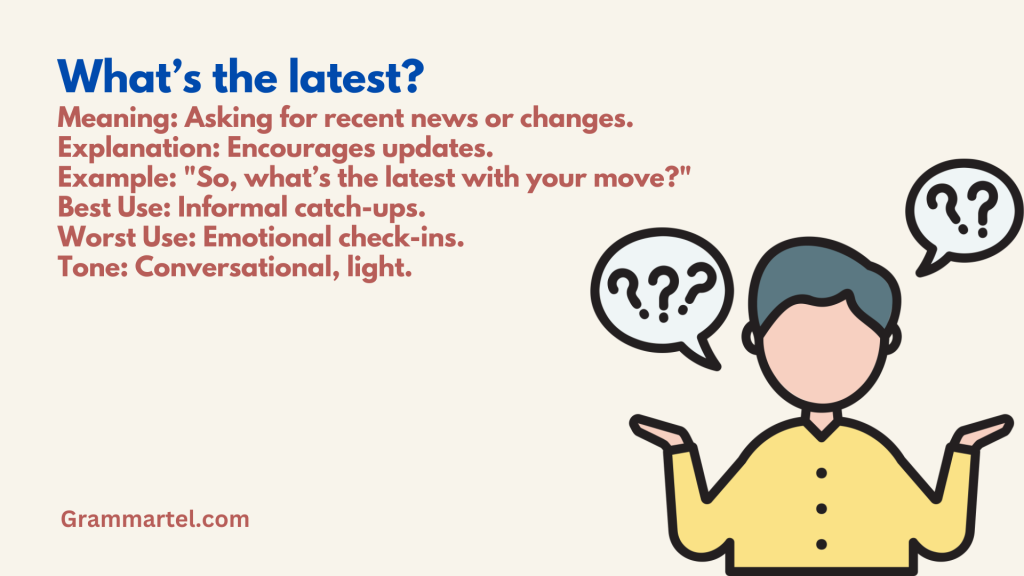
11. What’s the latest?
Meaning: Asking for recent news or changes.
Explanation: Encourages updates.
Example: “So, what’s the latest with your move?”
Best Use: Informal catch-ups.
Worst Use: Emotional check-ins.
Tone: Conversational, light.
12. What’s happening?
Meaning: Asking what’s going on right now.
Explanation: Very relaxed and spontaneous.
Example: “What’s happening, buddy?”
Best Use: Close friends, chill settings.
Worst Use: Strangers or formal meetings.
Tone: Casual, lively.
13. How’s your week been?
Meaning: Asking about their recent days.
Explanation: Gives timeframe context.
Example: “How’s your week been treating you?”
Best Use: Weekly check-ins.
Worst Use: At the beginning of a week.
Tone: Considerate, light.
14. What are you up to?
Meaning: Asking what someone is doing now.
Explanation: Focused on the present activity.
Example: “Hey! What are you up to?”
Best Use: Texts or casual chats.
Worst Use: Formal conversations.
Tone: Light, informal.
15. How’s work/school/life?
Meaning: Asking about a specific area.
Explanation: Shows interest in their daily routine.
Example: “How’s work been lately?”
Best Use: When you know their focus.
Worst Use: If you’re unsure of their current situation.
Tone: Inquisitive, friendly.
16. You hanging in there?
Meaning: Offering support in tough times.
Explanation: Suggests you know they’re struggling.
Example: “It’s been rough lately. You hanging in there?”
Best Use: When someone is stressed or overwhelmed.
Worst Use: Casual greetings.
Tone: Compassionate, supportive.
17. How are things on your end?
Meaning: Asking about their current life/state.
Explanation: Especially useful for remote or long-distance chats.
Example: “Things are hectic here. How are things on your end?”
Best Use: Remote work or long-distance relationships.
Worst Use: Face-to-face quick chats.
Tone: Friendly, formal.
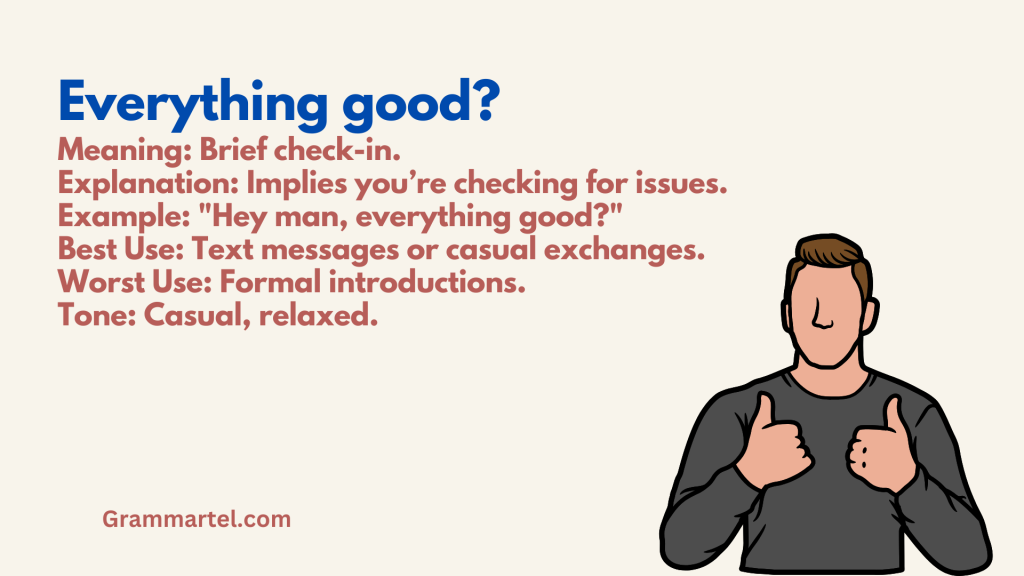
18. Everything good?
Meaning: Brief check-in.
Explanation: Implies you’re checking for issues.
Example: “Hey man, everything good?”
Best Use: Text messages or casual exchanges.
Worst Use: Formal introductions.
Tone: Casual, relaxed.
19. You alright?
Meaning: Checking emotional or physical wellness.
Explanation: A caring check-in.
Example: “You seemed quiet. You alright?”
Best Use: When someone seems off.
Worst Use: First-time meetings.
Tone: Caring, casual.
20. What’s good?
Meaning: Asking for positive updates.
Explanation: Optimistic and energetic greeting.
Example: “Hey, what’s good with you today?”
Best Use: Positive, upbeat conversations.
Worst Use: Serious topics.
Tone: Playful, cheerful.
Learn more: 40 Unique Ways to Say “You Look Beautiful” (With Examples).
21. Been keeping busy?
Meaning: Asking if they’ve had a lot going on lately.
Explanation: Implies curiosity about their routine or productivity.
Example: “Hey Jordan, been keeping busy?”
Best Use: Friendly catch-ups, light conversations.
Worst Use: With someone who’s likely burned out.
Tone: Casual, neutral.
22. How’s everything on your side?
Meaning: Asking how life is from their perspective.
Explanation: Shows balance in conversation.
Example: “Enough about me—how’s everything on your side?”
Best Use: Mutual updates in conversations.
Worst Use: When you don’t know them well.
Tone: Friendly, reciprocal.
23. What’s been keeping you going?
Meaning: Asking what’s motivating or exciting them.
Explanation: Encourages sharing passions or joys.
Example: “You’ve been so positive! What’s been keeping you going?”
Best Use: Deep chats with friends.
Worst Use: Formal meetings.
Tone: Supportive, thoughtful.
24. How are you holding up?
Meaning: Checking how they’re managing stress or hardship.
Explanation: Acknowledges difficult circumstances.
Example: “It’s been a crazy month—how are you holding up?”
Best Use: When someone’s facing challenges.
Worst Use: In casual, upbeat settings.
Tone: Empathetic, serious.
25. How’s the vibe today?
Meaning: Asking about mood or energy.
Explanation: Very modern, mood-centered phrasing.
Example: “Morning! How’s the vibe today?”
Best Use: Among peers or creative teams.
Worst Use: Formal or older audiences.
Tone: Trendy, light-hearted.
26. How’s your headspace lately?
Meaning: Checking in on their mental and emotional state.
Explanation: Focused on mental health.
Example: “You’ve had a lot going on. How’s your headspace lately?”
Best Use: With people you’re emotionally close to.
Worst Use: Surface-level chats or strangers.
Tone: Compassionate, deep.
27. What’s the mood today?
Meaning: Asking how they feel in the moment.
Explanation: Light and non-intrusive.
Example: “Hey hey, what’s the mood today?”
Best Use: Casual friends, creative spaces.
Worst Use: Emotional support check-ins.
Tone: Fun, light.
28. How are things shaping up?
Meaning: Asking about progress or development.
Explanation: Encourages updates, especially in projects or life plans.
Example: “How’s that new job? How are things shaping up?”
Best Use: Project-based or life transition conversations.
Worst Use: Very personal check-ins.
Tone: Curious, constructive.
29. You feeling balanced these days?
Meaning: Asking if they’re feeling stable.
Explanation: Wellness-focused, acknowledges burnout culture.
Example: “You’ve been juggling a lot—feeling balanced these days?”
Best Use: Mental health-aware environments.
Worst Use: Short, impersonal chats.
Tone: Thoughtful, supportive.
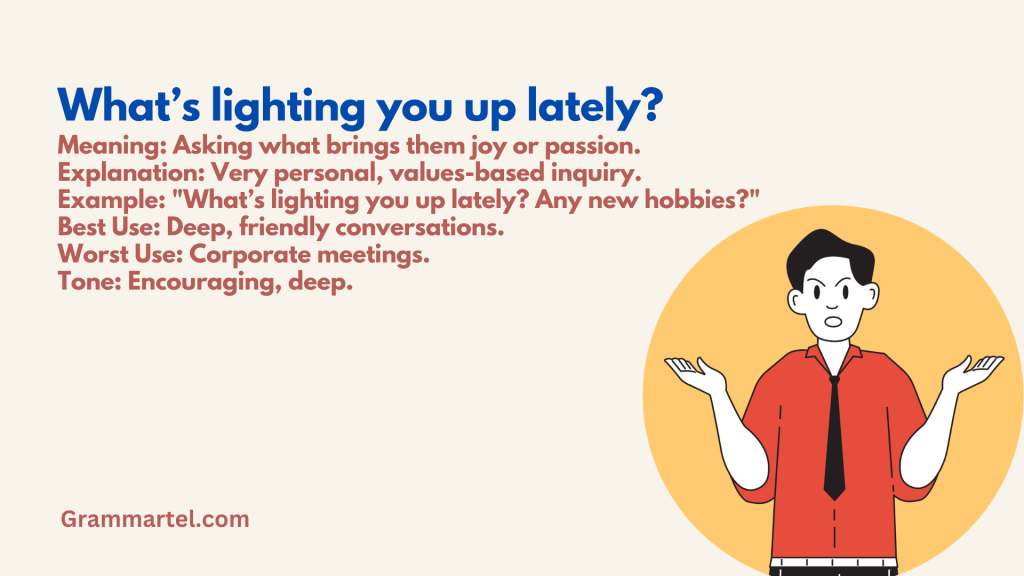
30. What’s lighting you up lately?
Meaning: Asking what brings them joy or passion.
Explanation: Very personal, values-based inquiry.
Example: “What’s lighting you up lately? Any new hobbies?”
Best Use: Deep, friendly conversations.
Worst Use: Corporate meetings.
Tone: Encouraging, deep.
31. What’s your current vibe?
Meaning: Asking for a snapshot of mood or mindset.
Explanation: Playful, creative language.
Example: “Quick check-in: what’s your current vibe?”
Best Use: Among creative teams or friends.
Worst Use: Conservative or professional settings.
Tone: Informal, quirky.
32. Any wins lately?
Meaning: Asking about recent successes.
Explanation: Helps focus on the positive.
Example: “Hey, any wins lately you wanna share?”
Best Use: Motivational or team settings.
Worst Use: When someone is struggling.
Tone: Positive, upbeat.
33. What’s on your mind today?
Meaning: Inviting them to share thoughts or concerns.
Explanation: Open-ended and mindful.
Example: “Hey, what’s on your mind today?”
Best Use: Close or coaching conversations.
Worst Use: Quick greetings.
Tone: Caring, conversational.
34. What’s your energy like today?
Meaning: Asking about mental or physical state.
Explanation: Encourages mindfulness.
Example: “You’ve been busy! What’s your energy like today?”
Best Use: Team check-ins or self-care talks.
Worst Use: Strictly formal settings.
Tone: Wellness-oriented.
35. How’s your heart?
Meaning: Deep emotional check-in.
Explanation: Goes beyond surface wellness.
Example: “How’s your heart these days?”
Best Use: Intimate or spiritual conversations.
Worst Use: Workplace greetings.
Tone: Gentle, soulful.
36. Are you surviving or thriving?
Meaning: Asking if they’re coping or doing well.
Explanation: Offers dual-option reflection.
Example: “Monday blues—surviving or thriving?”
Best Use: Semi-playful yet thoughtful chats.
Worst Use: After serious or tragic events.
Tone: Playful, reflective.
37. How’s your world?
Meaning: Asking how things are from their view.
Explanation: Broad but personal.
Example: “Hey there, how’s your world today?”
Best Use: Texts or casual friendships.
Worst Use: In deeply analytical or business contexts.
Tone: Poetic, warm.
38. How’s today treating you?
Meaning: Asking how the day is going.
Explanation: Current mood and experience check.
Example: “Morning! How’s today treating you?”
Best Use: Mornings, daily conversations.
Worst Use: Weekly catch-ups or big-picture talks.
Tone: Cheerful, short.
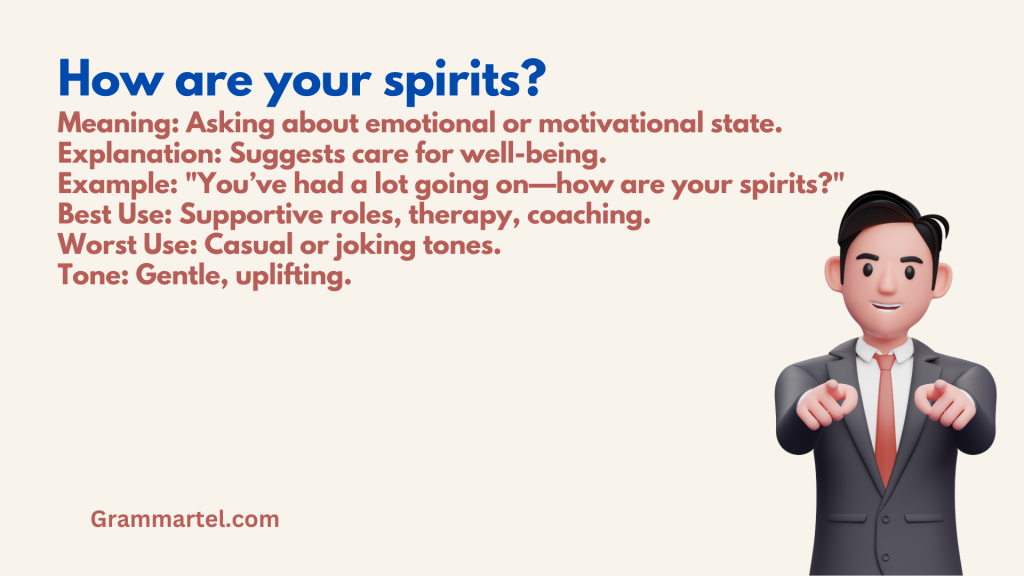
39. How are your spirits?
Meaning: Asking about emotional or motivational state.
Explanation: Suggests care for well-being.
Example: “You’ve had a lot going on—how are your spirits?”
Best Use: Supportive roles, therapy, coaching.
Worst Use: Casual or joking tones.
Tone: Gentle, uplifting.
See also: 35 Effective Alternatives to Say “Well Received” (With Examples).
40. Anything you want to talk about?
Meaning: Giving permission to open up.
Explanation: Implies deep trust and readiness to listen.
Example: “Hey, anything you want to talk about?”
Best Use: Trusted relationships, deep talks.
Worst Use: Surface-level greetings.
Tone: Open, compassionate.
Conclusion
Saying “How are you?” isn’t wrong—but switching it up now and then can make your conversations feel more genuine. A thoughtful question can open the door to a better chat, whether it’s with someone close or just an everyday interaction. So next time, try something new. It might surprise you how much people open up when they hear something a little different—and more sincere.
Don’t just write—write right, with Grammartel.