
When you meet someone new, whether online or in person, it’s important to express that you’re happy to connect with them. Saying “Nice to connect with you” is a common phrase, but sometimes it’s nice to mix things up. There are many creative ways to convey the same message while sounding fresh and friendly. In this guide, we’ll share 40 great alternatives to “Nice to connect with you,” along with examples to help you choose the perfect phrase for any situation.
What Does “Nice to Connect With You” Mean?
“Nice to Connect With You” is a friendly way to express pleasure in meeting someone, especially in professional settings. It’s commonly used after making a new connection, whether online or in person. The phrase shows respect and appreciation, letting the other person know you’re pleased to establish contact. It’s often used in emails, LinkedIn messages, or at the beginning of conversations.
When to Use “Nice to Connect With You”
You can use this phrase when you first meet someone in a professional or casual setting. It’s ideal for LinkedIn introductions, after a networking event, or when following up on a new connection. It’s a polite and warm way to start building a relationship. Avoid using it too early in a conversation, as it can feel rushed or insincere.
40 Best Ways to Say “Nice to Connect With You”
1. Great to Meet You
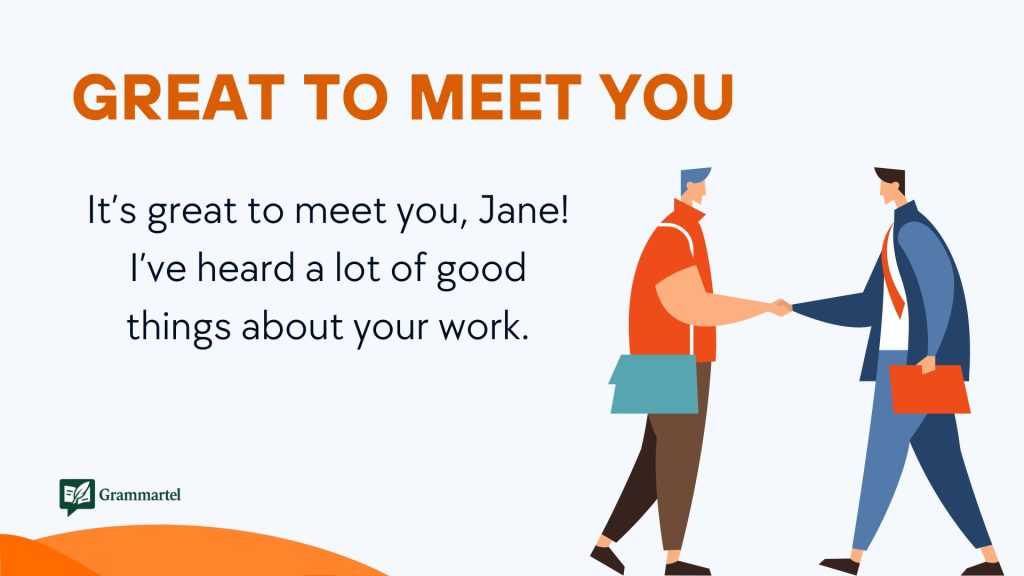
Meaning: Expresses enthusiasm about meeting someone for the first time.
Explanation: This phrase conveys a positive feeling about an initial interaction.
Example: “It’s great to meet you, Jane! I’ve heard a lot of good things about your work.”
Best Use: Professional networking events or casual introductions.
Worst Use: When the meeting is not genuine or enthusiastic.
Tone: Warm, friendly.
2. Pleased to Make Your Acquaintance
Meaning: A formal way of saying you’re happy to meet someone.
Explanation: This is a more traditional, polite way of expressing pleasure at an introduction.
Example: “Pleased to make your acquaintance, Mr. Smith. I look forward to collaborating.”
Best Use: In professional settings or formal events.
Worst Use: In casual, informal settings.
Tone: Formal, respectful.
3. It’s a Pleasure to Connect
Meaning: Indicates a sense of enjoyment in connecting with someone.
Explanation: This phrase emphasizes the enjoyment of the interaction.
Example: “It’s a pleasure to connect with you, Sarah! I look forward to learning from your experience.”
Best Use: Networking, introductions, or business settings.
Worst Use: Informal situations where a more casual tone is preferred.
Tone: Polite, professional.
4. Glad We Could Connect
Meaning: A casual, friendly way to show satisfaction about establishing a connection.
Explanation: This phrase suggests a mutual sense of contentment about the connection.
Example: “I’m so glad we could connect today! I’m excited to share ideas.”
Best Use: Informal interactions, especially in professional settings.
Worst Use: When the connection feels forced.
Tone: Casual, approachable.
Take a look at : 40 Other Ways to Say “Happy Valentine’s Day” (With Examples).
5. Nice to Meet You
Meaning: A straightforward and commonly used phrase when meeting someone.
Explanation: A simple way to convey you’re happy to meet someone.
Example: “Nice to meet you, John. I’ve been following your work for a while.”
Best Use: First-time meetings or casual introductions.
Worst Use: When you’re already familiar with the person.
Tone: Friendly, neutral.
6. It’s Wonderful to Make Your Acquaintance
Meaning: A more elegant version of “nice to meet you.”
Explanation: Expresses a more polished or refined appreciation for meeting someone.
Example: “It’s wonderful to make your acquaintance, Mr. Davis. I’m excited about the potential for collaboration.”
Best Use: Formal meetings or high-level introductions.
Worst Use: In very informal settings.
Tone: Elegant, respectful.
7. Good to Meet You
Meaning: A basic, friendly way of acknowledging an introduction.
Explanation: This phrase is direct and to the point.
Example: “Good to meet you, Rebecca. I look forward to working together.”
Best Use: Casual and professional introductions.
Worst Use: In situations requiring formality.
Tone: Neutral, polite.
8. Happy to Connect
Meaning: Expresses genuine happiness about making a connection.
Explanation: A cheerful and positive phrase for new interactions.
Example: “Happy to connect with you, Emily! I’m looking forward to our discussion.”
Best Use: Informal or semi-formal meetings.
Worst Use: When the connection doesn’t feel genuine.
Tone: Warm, enthusiastic.
9. Delighted to Meet You
Meaning: A more enthusiastic and positive way of saying you’re pleased to meet someone.
Explanation: Emphasizes excitement about meeting the person.
Example: “Delighted to meet you, Mark! I’ve heard so much about your team’s work.”
Best Use: First-time meetings where you want to show interest.
Worst Use: In overly formal or stiff settings.
Tone: Excited, warm.
10. It’s Great to Finally Meet You
Meaning: Used when you’ve been in contact before but are meeting in person for the first time.
Explanation: Acknowledge that you’ve known each other previously but are now meeting face-to-face.
Example: “It’s great to finally meet you, Linda. We’ve had some great conversations online.”
Best Use: When transitioning from virtual to in-person interactions.
Worst Use: In situations where there hasn’t been prior contact.
Tone: Excited, friendly.
11. I’m Excited to Connect
Meaning: Shows enthusiasm and eagerness about the connection.
Explanation: A way to express that you’re looking forward to engaging with the person.
Example: “I’m excited to connect with you, Adam! I’ve heard great things about your project.”
Best Use: Professional networking and collaborations.
Worst Use: When you’re not genuinely interested in the connection.
Tone: Positive, enthusiastic.
12. Wonderful to Connect with You
Meaning: A warm and positive way to express appreciation for connecting.
Explanation: Shows that you’re happy and grateful for the interaction.
Example: “Wonderful to connect with you, Kate! I’m eager to hear your insights.”
Best Use: Business and professional settings.
Worst Use: In overly casual or informal settings.
Tone: Warm, positive.
13. I’m Honored to Meet You
Meaning: A formal and respectful way of expressing your pleasure in meeting someone.
Explanation: Implies that meeting the person is a privilege.
Example: “I’m honored to meet you, Mr. Anderson. I have great respect for your work.”
Best Use: Formal or high-level introductions.
Worst Use: In casual or informal situations.
Tone: Respectful, formal.
14. Great to Finally Make Your Acquaintance
Meaning: Indicates you’ve heard about someone or interacted with them indirectly before meeting in person.
Explanation: Expresses satisfaction about meeting someone you’ve only heard of before.
Example: “Great to finally make your acquaintance, Sarah! I’ve heard so much about your achievements.”
Best Use: After prior virtual or indirect communication.
Worst Use: If you’ve never heard of the person before.
Tone: Friendly, respectful.
15. Nice to Get to Know You
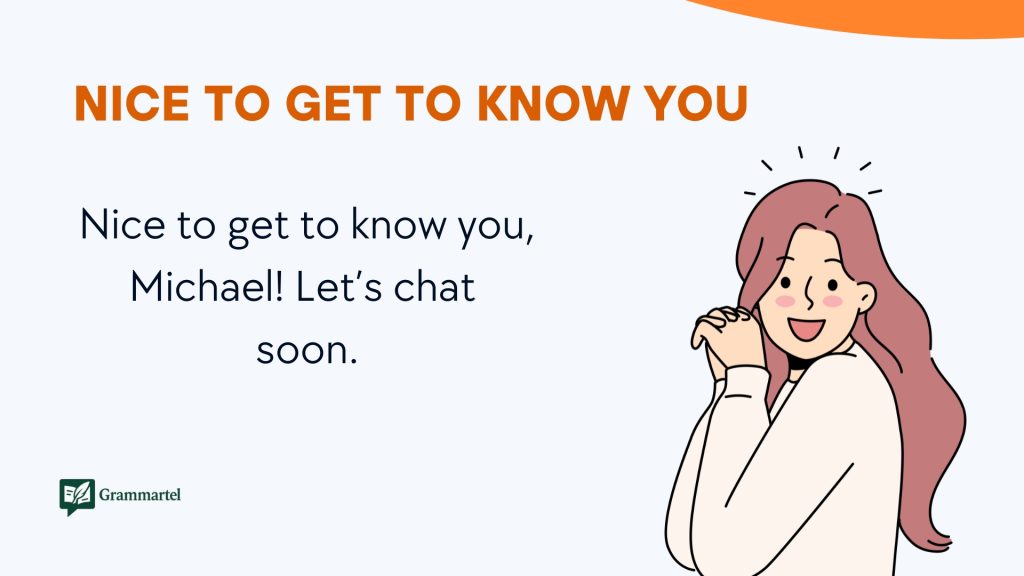
Meaning: A casual way of expressing interest in learning more about someone.
Explanation: Shows you’re looking forward to deepening your relationship.
Example: “Nice to get to know you, Michael! Let’s chat soon.”
Best Use: Informal meetings or early-stage relationships.
Worst Use: When you don’t actually intend to follow up.
Tone: Friendly, informal
16. So Glad We Could Meet
Meaning: Expresses satisfaction about meeting the person.
Explanation: This is a friendly phrase that shows appreciation.
Example: “So glad we could meet, Lucy! I’m excited to see how we can collaborate.”
Best Use: Professional or social networking events.
Worst Use: When the meeting isn’t enjoyable.
Tone: Positive, enthusiastic.
17. Wonderful to Finally Meet You
Meaning: A warm expression for when you’ve been anticipating a face-to-face meeting.
Explanation: This phrase suggests excitement for a long-awaited interaction.
Example: “Wonderful to finally meet you, Josh! I’ve been looking forward to this for a while.”
Best Use: After many email exchanges or virtual meetings.
Worst Use: When you’ve never heard of the person.
Tone: Warm, positive.
18. I’m Looking Forward to Getting to Know You
Meaning: Shows interest in forming a deeper connection.
Explanation: Indicates you’re eager to build a relationship with the person.
Example: “I’m looking forward to getting to know you, Emma. Your work sounds fascinating.”
Best Use: When you’re genuinely interested in building a relationship.
Worst Use: When you’re only going through the motions.
Tone: Friendly, sincere.
19. It’s Great to Make Your Acquaintance
Meaning: A formal or semi-formal expression of satisfaction about meeting someone.
Explanation: A slightly more sophisticated way to acknowledge meeting someone.
Example: “It’s great to make your acquaintance, Brian. I’ve heard a lot of great things about your team.”
Best Use: Professional or networking settings.
Worst Use: In informal situations.
Tone: Professional, courteous.
20. I’m Happy We Could Connect
Meaning: Shows happiness and satisfaction at forming a connection.
Explanation: A straightforward, friendly expression of appreciation.
Example: “I’m happy we could connect today, Lisa. I think there’s a lot we can collaborate on.”
Best Use: Business networking or informal interactions.
Worst Use: When the connection is not meaningful.
Tone: Positive, enthusiastic.
21. It’s Nice to Put a Face to the Name
Meaning: Acknowledges that you’ve heard of the person before but are meeting them in person for the first time.
Explanation: This phrase is perfect for those who have only known each other virtually.
Example: “It’s nice to put a face to the name, Tom! I’m excited to meet in person.”
Best Use: After a virtual introduction or phone call.
Worst Use: When you’ve already met before.
Tone: Friendly, casual
22. Nice to Touch Base
Meaning: A casual and professional way of saying you’re happy to connect.
Explanation: Often used in business contexts to express interest in connecting.
Example: “Nice to touch base with you, Paul! I look forward to hearing more about your project.”
Best Use: Follow-ups after initial meetings or emails.
Worst Use: In formal introductions or events.
Tone: Professional, approachable.
23. Good to Finally Meet You in Person
Meaning: Expresses joy at meeting someone after communicating online.
Explanation: Implies that you’ve had digital communication before the in-person meeting.
Example: “Good to finally meet you in person, Susan! I’m glad we could make this happen.”
Best Use: When transitioning from online to offline communication.
Worst Use: When there has been no prior contact.
Tone: Positive, friendly.
24. Thrilled to Meet You
Meaning: Shows extreme excitement about meeting someone.
Explanation: This phrase conveys high levels of enthusiasm and excitement.
Example: “Thrilled to meet you, Mark! I’ve been wanting to meet you for a while.”
Best Use: When you’re genuinely excited and thrilled about meeting.
Worst Use: In overly formal or neutral settings.
Tone: Very enthusiastic, energetic.
25. It’s a Pleasure to Make Your Acquaintance
Meaning: A refined way of expressing happiness at meeting someone.
Explanation: Shows a mix of politeness and positive regard.
Example: “It’s a pleasure to make your acquaintance, Caroline. I’ve heard wonderful things about your work.”
Best Use: Formal business settings or high-profile meetings.
Worst Use: In casual settings where a more informal phrase is better.
Tone: Formal, courteous.
26. Nice to Link Up
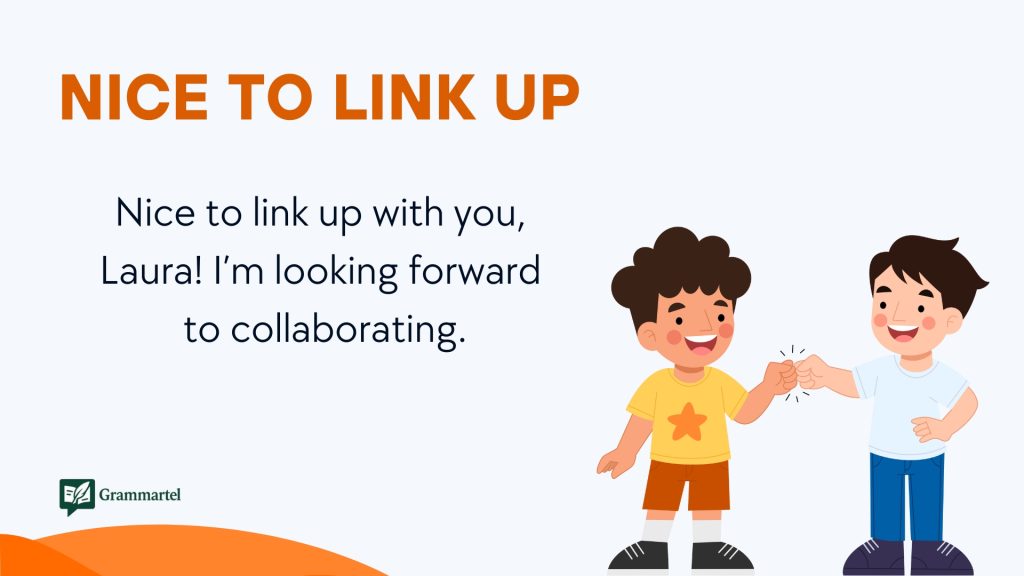
Meaning: A casual and modern way to say it’s nice to connect.
Explanation: Often used in the context of social media or digital connections.
Example: “Nice to link up with you, Laura! I’m looking forward to collaborating.”
Best Use: Informal, digital, or networking contexts.
Worst Use: In professional or formal meetings.
Tone: Casual, modern.
27. It’s a Privilege to Meet You
Meaning: A formal and respectful expression of appreciation.
Explanation: Shows that you value the meeting highly.
Example: “It’s a privilege to meet you, Dr. Carter. Your research has been truly inspiring.”
Best Use: Formal situations, especially with highly respected individuals.
Worst Use: Casual settings.
Tone: Formal, respectful.
28. I’m Excited to Meet You
Meaning: Indicates eagerness and enthusiasm for the encounter.
Explanation: Conveys excitement about meeting someone.
Example: “I’m excited to meet you, John! I’ve been looking forward to this conversation.”
Best Use: Networking events, team meetings, and new collaborations.
Worst Use: When you’re not truly excited about meeting.
Tone: Excited, friendly.
29. Great to Meet You Virtually
Meaning: Used when meeting someone for the first time online.
Explanation: Acknowledges that the meeting is taking place online rather than in person.
Example: “Great to meet you virtually, Lisa! I’m looking forward to getting to know you.”
Best Use: In virtual meetings or remote work settings.
Worst Use: In face-to-face situations.
Tone: Friendly, neutral.
30. It’s Lovely to Meet You
Meaning: An affectionate and positive expression of meeting someone.
Explanation: Implies warmth and a sense of genuine pleasure.
Example: “It’s lovely to meet you, James. Your ideas are really inspiring.”
Best Use: Personal or semi-formal introductions.
Worst Use: In overly professional settings.
Tone: Warm, polite.
31. Nice to Make Your Acquaintance After All This Time
Meaning: When you’ve known someone for a long time but only just met in person.
Explanation: Acknowledges the anticipation before meeting someone.
Example: “Nice to make your acquaintance after all this time, Alex! We’ve exchanged emails so many times.”
Best Use: After a long virtual relationship.
Worst Use: If the meeting is not long-awaited.
Tone: Warm, friendly.
32. Fantastic to Meet You
Meaning: A very enthusiastic version of “nice to meet you.”
Explanation: Shows great excitement and positivity about meeting the person.
Example: “Fantastic to meet you, Maria! I’m thrilled to finally connect.”
Best Use: High-energy meetings or events.
Worst Use: In formal settings where a more reserved tone is needed.
Tone: Enthusiastic, high-energy.
33. I’m Glad We Could Meet
Meaning: A positive expression of satisfaction about the meeting.
Explanation: This phrase conveys contentment about making the connection.
Example: “I’m glad we could meet today, Steve! I look forward to collaborating.”
Best Use: Professional or informal settings.
Worst Use: If the connection feels forced or unnecessary.
Tone: Positive, friendly.
34. So Nice to Meet You
Meaning: An informal and friendly way of saying you’re happy to meet someone.
Explanation: A simple and approachable expression of pleasure at meeting someone.
Example: “So nice to meet you, Ben! I’ve been following your blog for a while.”
Best Use: Casual, informal settings.
Worst Use: In formal or stiff contexts.
Tone: Friendly, casual.
35. A Pleasure to Connect
Meaning: A formal expression of gratitude or appreciation for the connection.
Explanation: Implies that the interaction was meaningful and enjoyable.
Example: “A pleasure to connect, Rachel! Let’s discuss how we can collaborate.”
Best Use: Business or formal connections.
Worst Use: In overly casual contexts.
Tone: Professional, respectful.
36. It’s an Honor to Meet You
Meaning: Shows deep respect and admiration for the person you’re meeting.
Explanation: This is used in highly respectful or formal situations.
Example: “It’s an honor to meet you, Dr. Wilson. Your research has influenced my own work.”
Best Use: Formal meetings or when meeting someone highly respected.
Worst Use: In casual or informal settings.
Tone: Formal, respectful.
Continue learning with : 40 Professional Ways to Say “Thank You for Your Flexibility” (With Examples).
37. Great to Catch Up
Meaning: A relaxed way of saying you’re happy to reconnect after some time.
Explanation: Often used when you’re meeting someone you’ve previously known but haven’t seen in a while.
Example: “Great to catch up, Julia! It’s been too long.”
Best Use: Reconnecting with an acquaintance or friend.
Worst Use: When meeting someone for the first time.
Tone: Friendly, casual.
38. I’m So Glad We Met
Meaning: Expresses joy and satisfaction after a meeting.
Explanation: Shows that the meeting was meaningful and pleasant.
Example: “I’m so glad we met, Mark! I think we can really work well together.”
Best Use: After a positive interaction.
Worst Use: When the interaction wasn’t positive.
Tone: Warm, enthusiastic.
39. So Happy to Make Your Acquaintance
Meaning: A more positive and cheerful version of “nice to meet you.”
Explanation: A friendly and lighthearted way to express joy at meeting someone.
Example: “So happy to make your acquaintance, Nancy! Let’s stay in touch.”
Best Use: Casual meetings or friendly networking events.
Worst Use: In formal business situations.
Tone: Happy, cheerful.
40. I’m Happy to Meet You
Meaning: Expresses contentment and joy in the meeting.
Explanation: A simple, positive expression of happiness about meeting.
Example: “I’m happy to meet you, Chris! I’ve heard so much about your team.”
Best Use: First meetings or informal introductions.
Worst Use: When the meeting isn’t genuine.
Tone: Positive, happy.
Conclusion
Using different ways to say “Nice to connect with you” helps keep your conversations engaging and personal. Whether you’re networking, meeting someone for the first time, or just want to sound a little different, these phrases will come in handy. Choose one that feels right, and you’ll leave a positive impression every time.
Stay up-to-date with the latest learning modules from Grammartel.